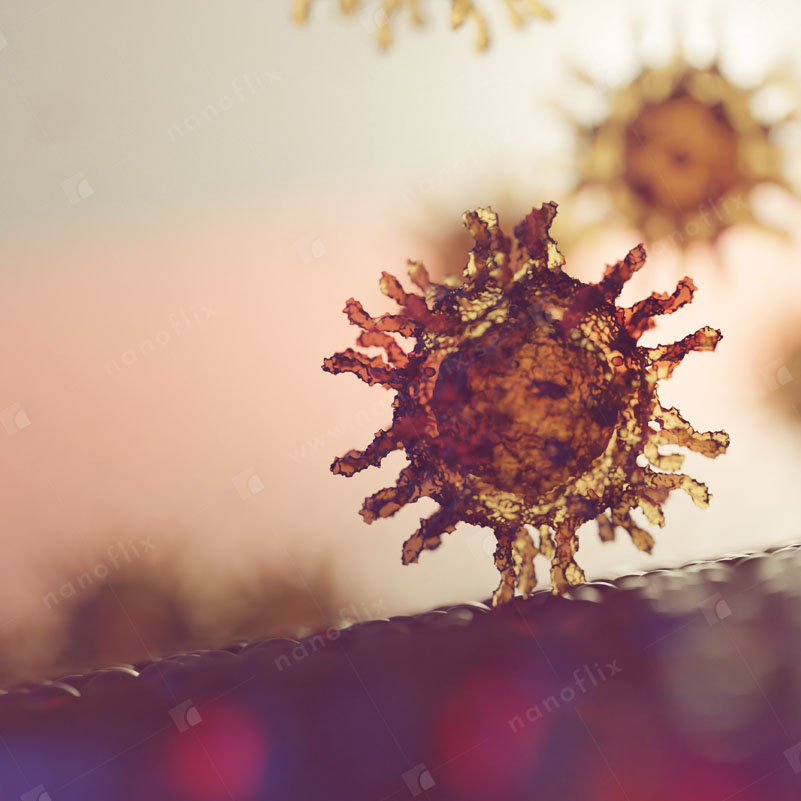
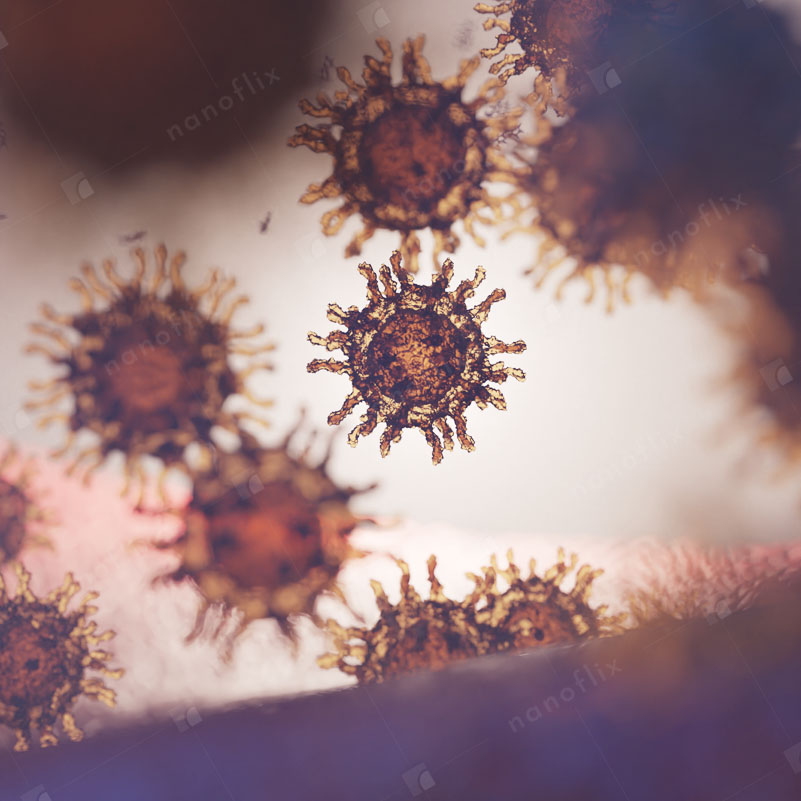
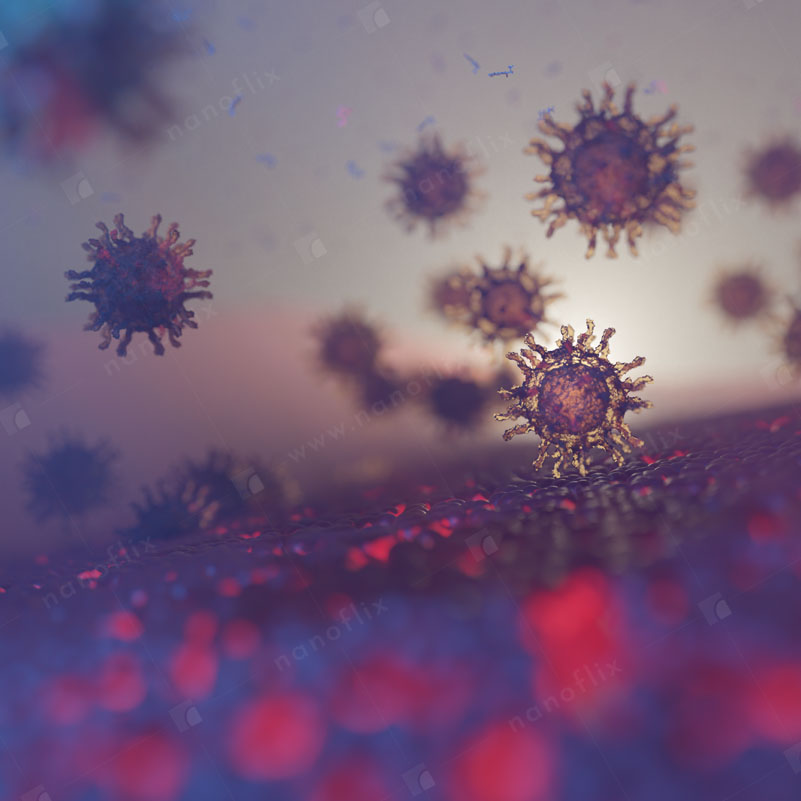
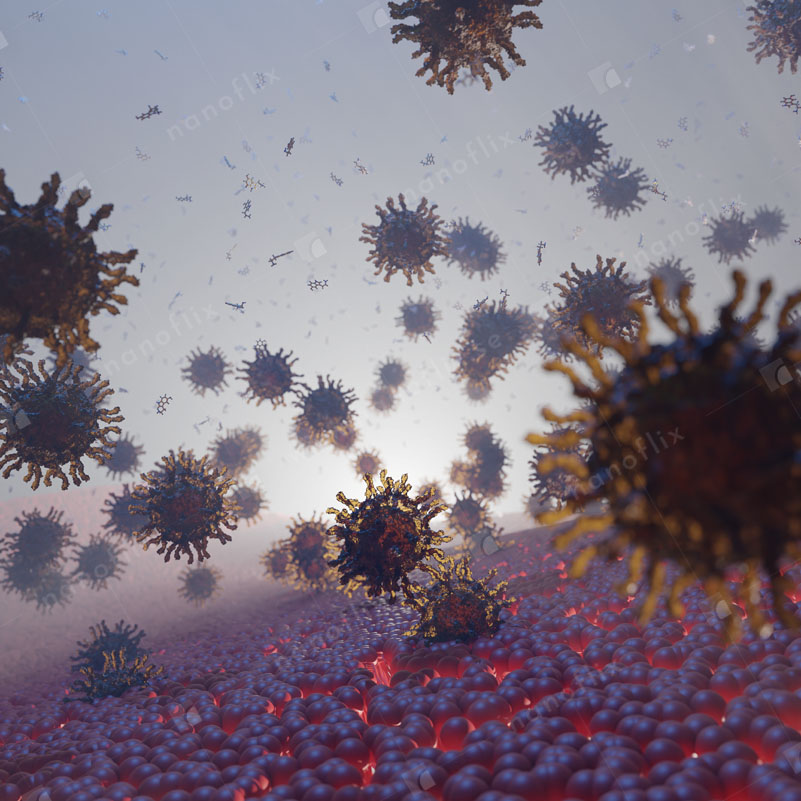
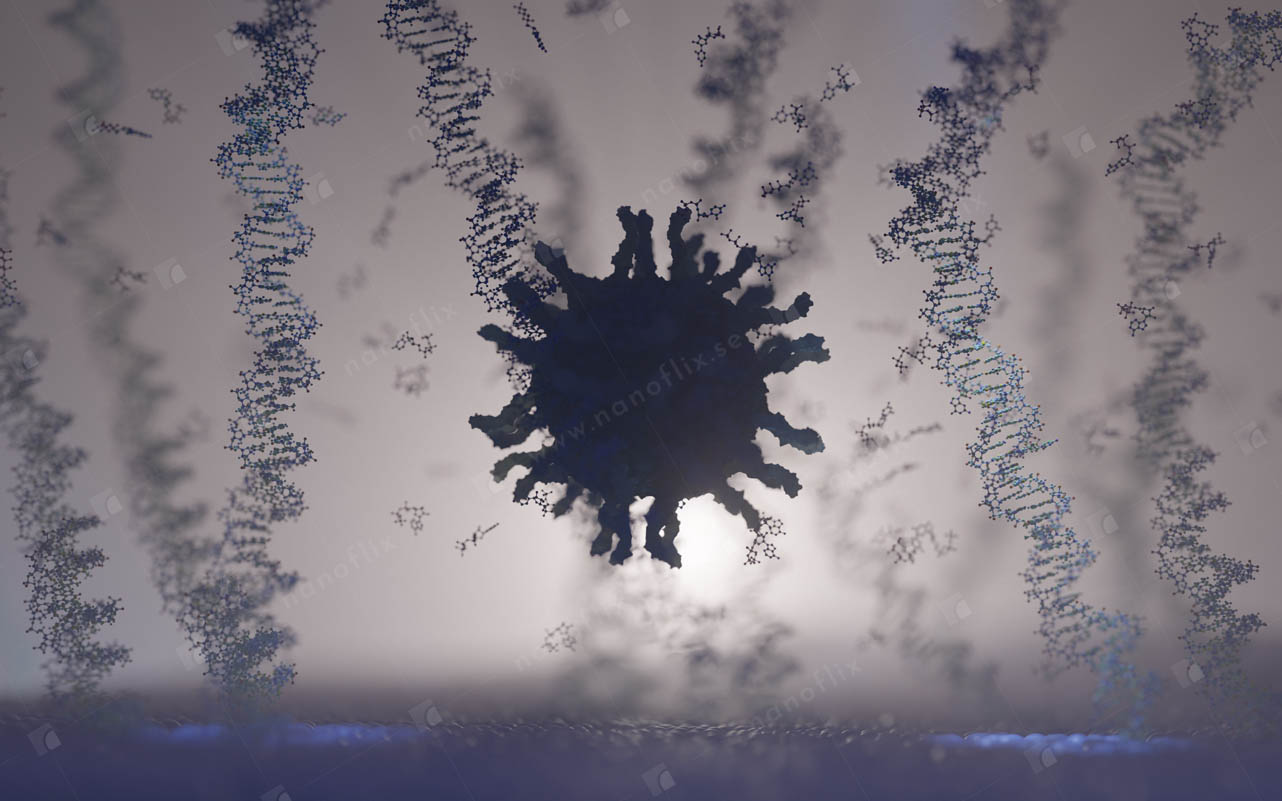
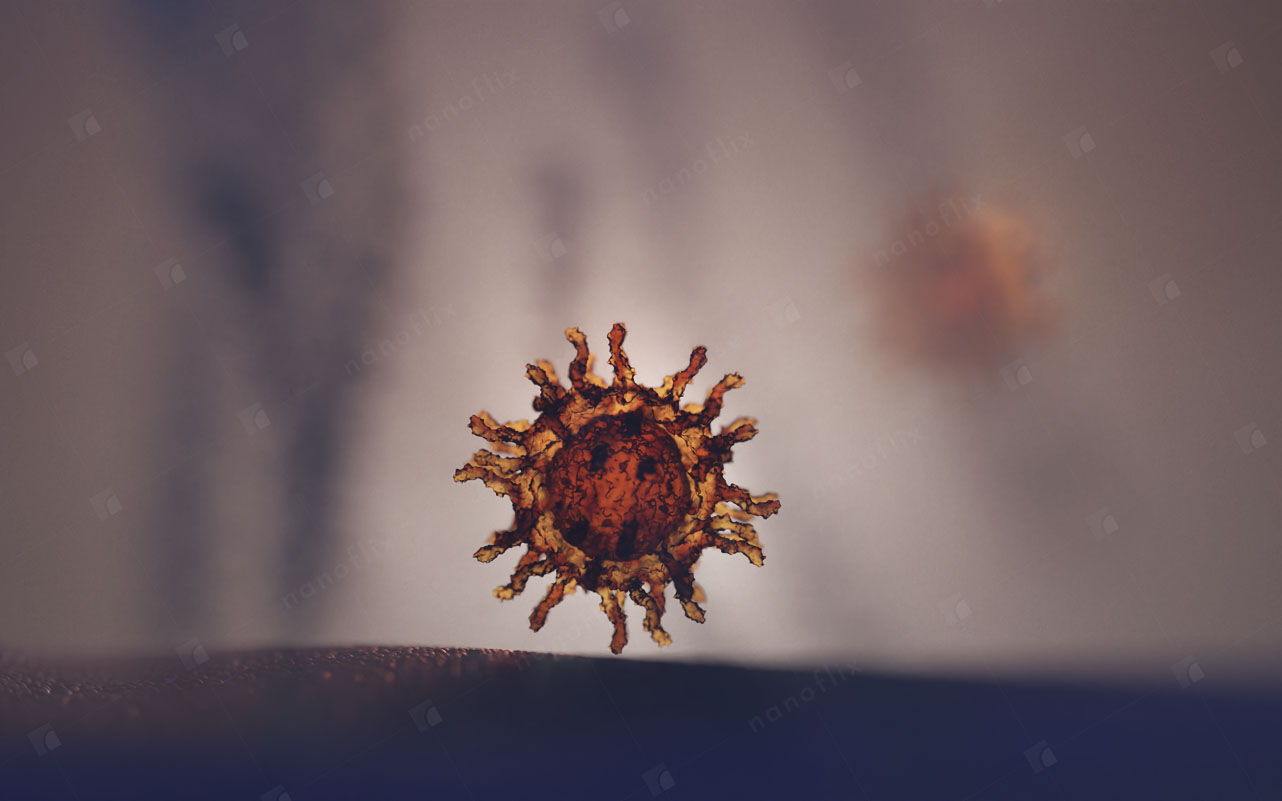
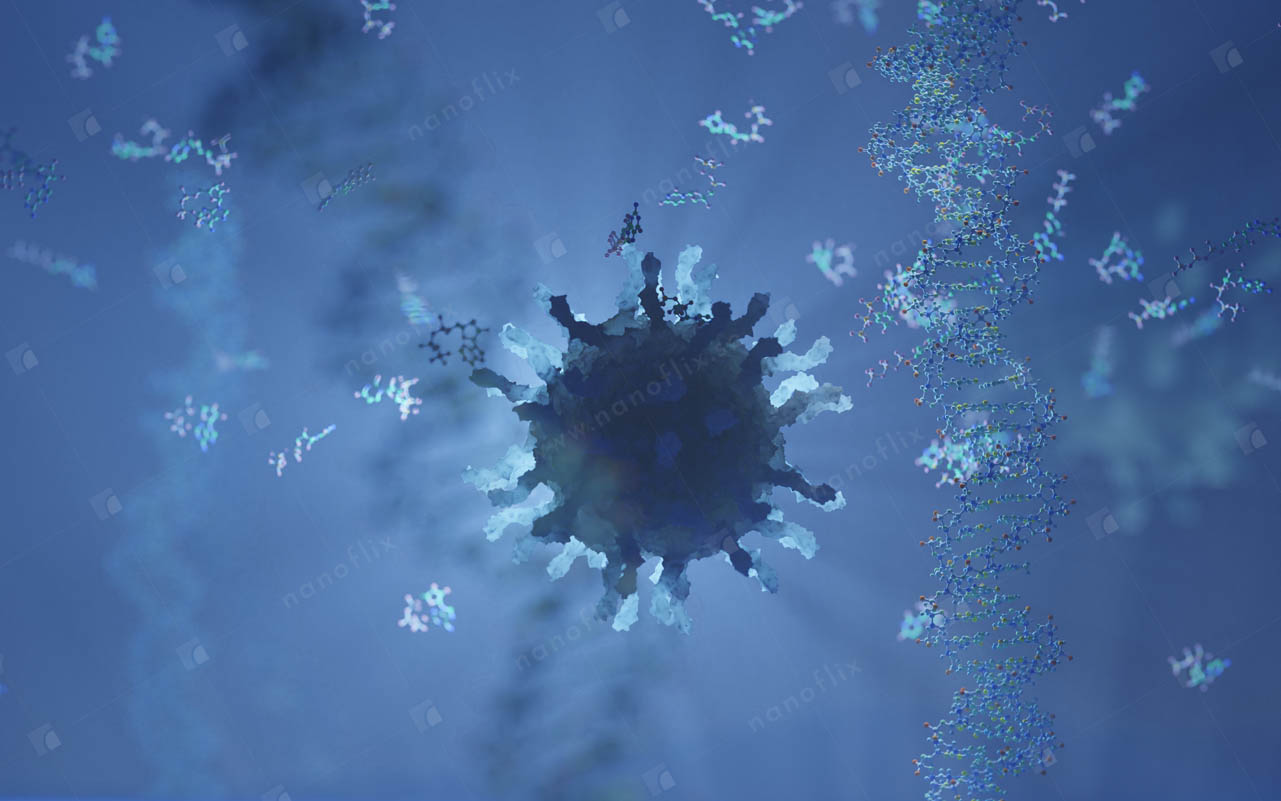
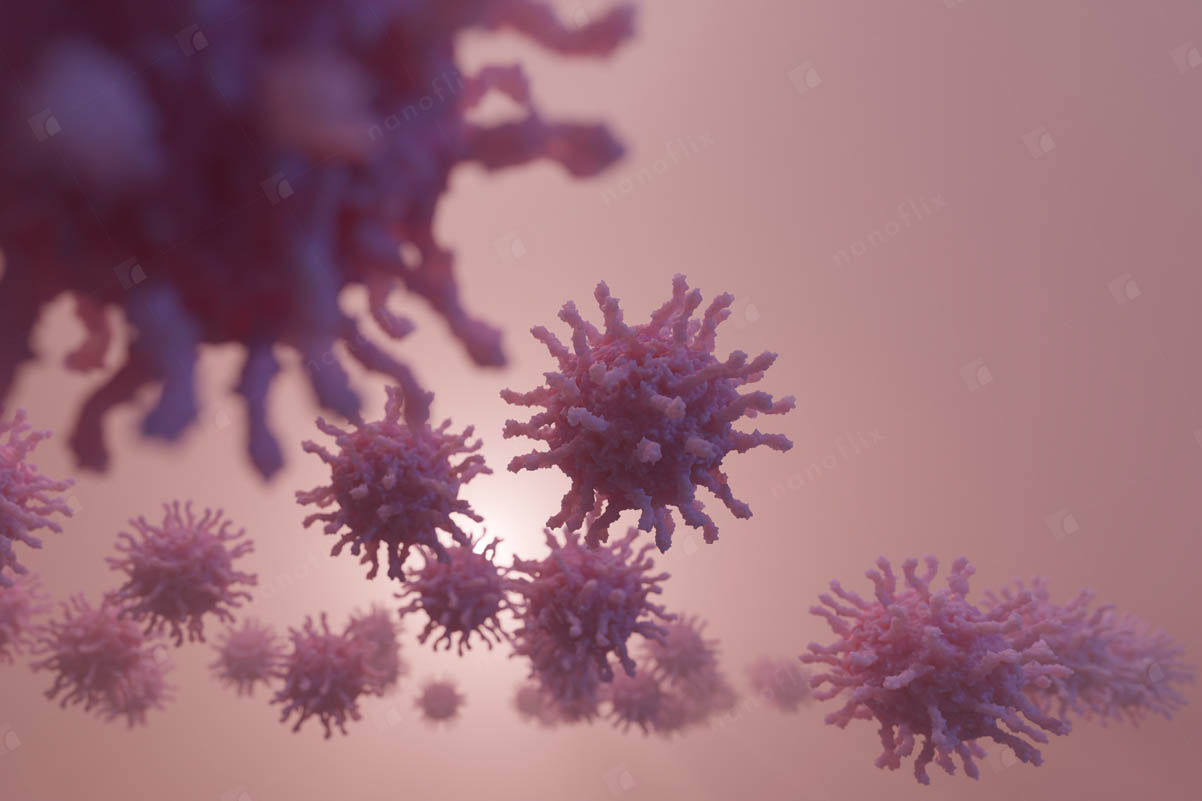
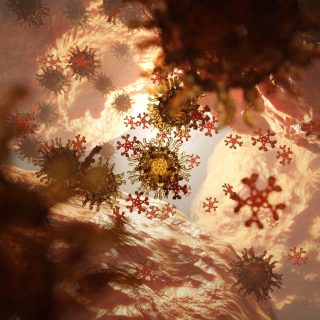
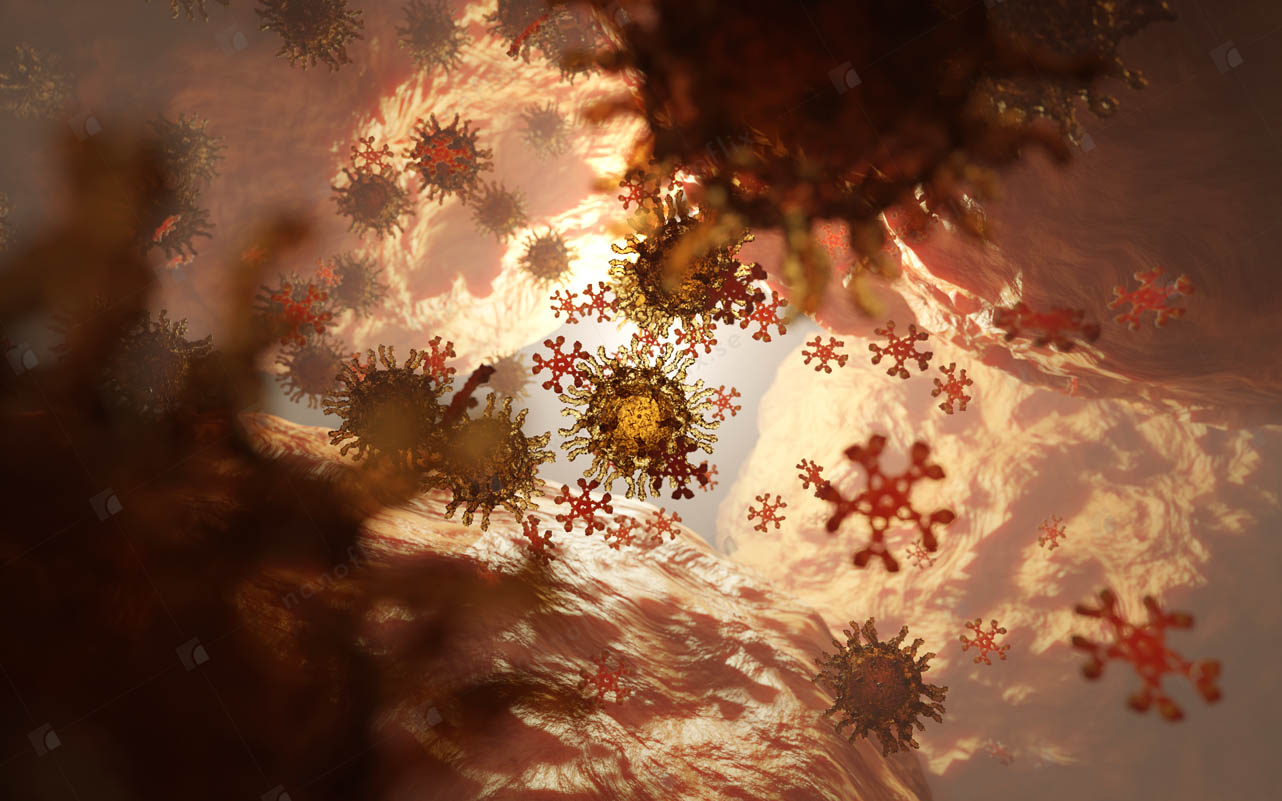
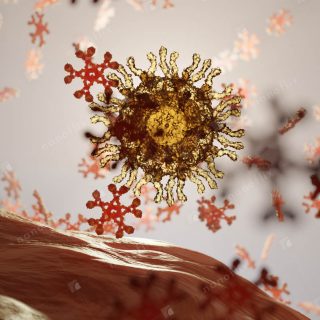
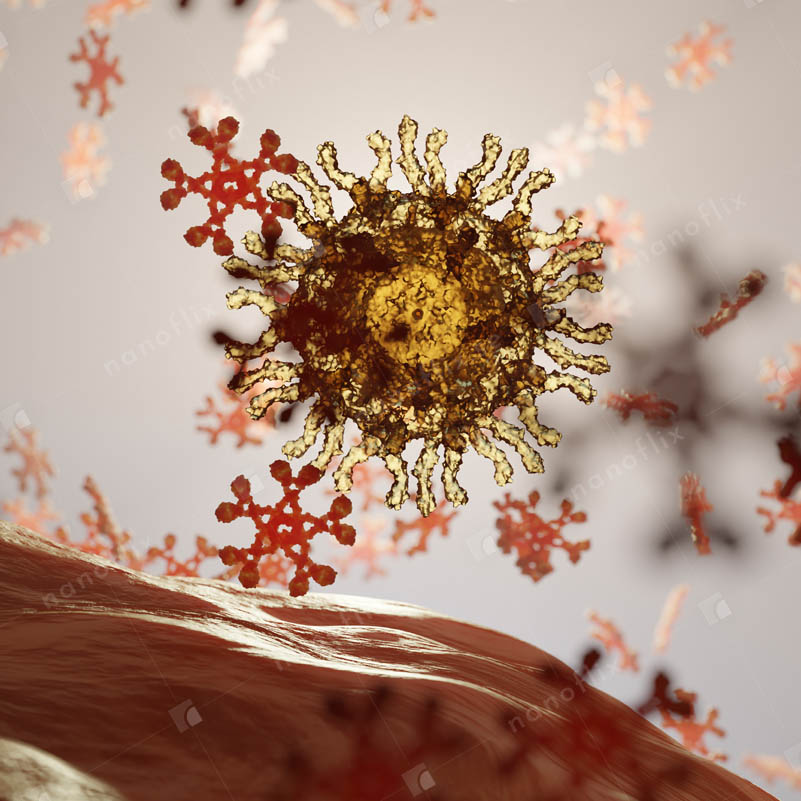
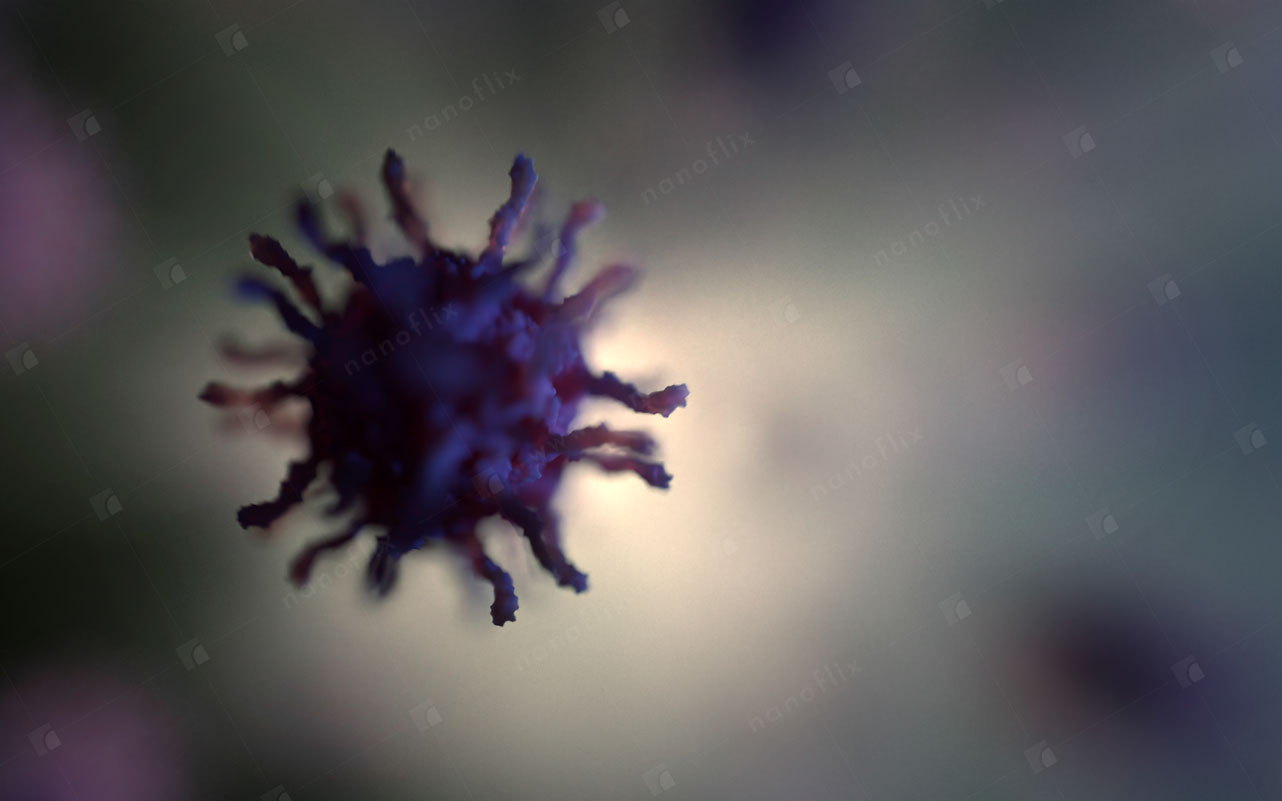
Poliovirus is a small (30 nm) positive-stranded RNA virus. The genome enclosed within the viral particle can be used as messenger RNA and therefore be directly translated by the host cell. On entry, the virus hijacks the cell’s translation machinery, causing inhibition of cellular protein synthesis in favor of virus-specific protein production.
Recent experimental evidence suggests that poliovirus binds to CD155 and is taken up by endocytosis. Immediately after internalization of the particle, the viral RNA is released.
Poliovirus uses two key mechanisms to evade the immune system. First, it is capable of surviving the highly acidic conditions of the stomach, allowing the virus to infect the host and spread throughout the body via the lymphatic system. Second, because it can replicate very quickly, the virus overwhelms the host organs before an immune response can be mounted. The canyons of the virion are too narrow for access by antibodies, so the virus attachment sites are protected from the host’s immune surveillance. However, most individuals who are exposed to poliovirus, either through infection or by immunization with polio vaccine, develop immunity. In immune individuals, antibodies against poliovirus are present in the tonsils and gastrointestinal tract (specifically IgA antibodies) and are able to block poliovirus replication. IgG and IgM antibodies against poliovirus can prevent the spread of the virus to motor neurons of the central nervous system, avoiding paralysis and ultimately death.
-
- © 2021 Nanoflix/Jakob Hall
-

- © 2021 Nanoflix/Jakob Hall
-

- © 2021 Nanoflix/Jakob Hall

-
- © 2021 Nanoflix/Jakob Hall
-
- © 2021 Nanoflix/Jakob Hall

-
- © 2021 Nanoflix/Jakob Hall
-

- © 2021 Nanoflix/Jakob Hall

-
- © 2021 Nanoflix/Jakob Hall
-
- © 2021 Nanoflix/Jakob Hall

-
- © 2021 Nanoflix/Jakob Hall
-
- © 2021 Nanoflix/Jakob Hall
-

- © 2021 Nanoflix/Jakob Hall

-

- © 2021 Nanoflix/Jakob Hall
-
- © 2021 Nanoflix/Jakob Hall
-
- © 2021 Nanoflix/Jakob Hall
-
- © 2021 Nanoflix/Jakob Hall
-

- © 2021 Nanoflix/Jakob Hall

-
- © 2021 Nanoflix/Jakob Hall

Most people who get infected with poliovirus (about 72 out of 100) will not have any visible symptoms. About 1 out of 4 people with poliovirus infection will have flu-like symptoms. A smaller proportion of people (much less than one out of 100, or 1-5 out of 1000) with poliovirus infection will develop other, more serious symptoms that affect the brain and spinal cord. Paralysis is the most severe symptom associated with polio, because it can lead to permanent disability and death. Between 2 and 10 out of 100 people who have paralysis from poliovirus infection die, because the virus affects the muscles that help them breathe.
Even children who seem to fully recover can develop new muscle pain, weakness, or paralysis as adults, 15 to 40 years later. This is called post-polio syndrome.